One of the first things we started to discuss at 19six as the reality of the global pandemic set in was what the classroom of the future might look like. We didn’t have clear guidance at the beginning, and there is still a veil of uncertainty as districts start to open back up. We did, however, have a strong body of student-centered thinking and insights from our team.
While the COVID-19 pandemic forced educators to adapt to distance learning instruction, we didn’t feel that Zoom classrooms would be the new normal. Some of our Education clients adopted staggered schedules where half the class is physically in the classroom with an instructor while the other half is at home interacting via digital resources. The teacher/student connection, physical or virtual, is at the heart of effective learning, and we knew we needed to monitor the pros & cons of distance learning as we designed for the future.
It was true before the pandemic, and it holds true now; learning is a social activity.
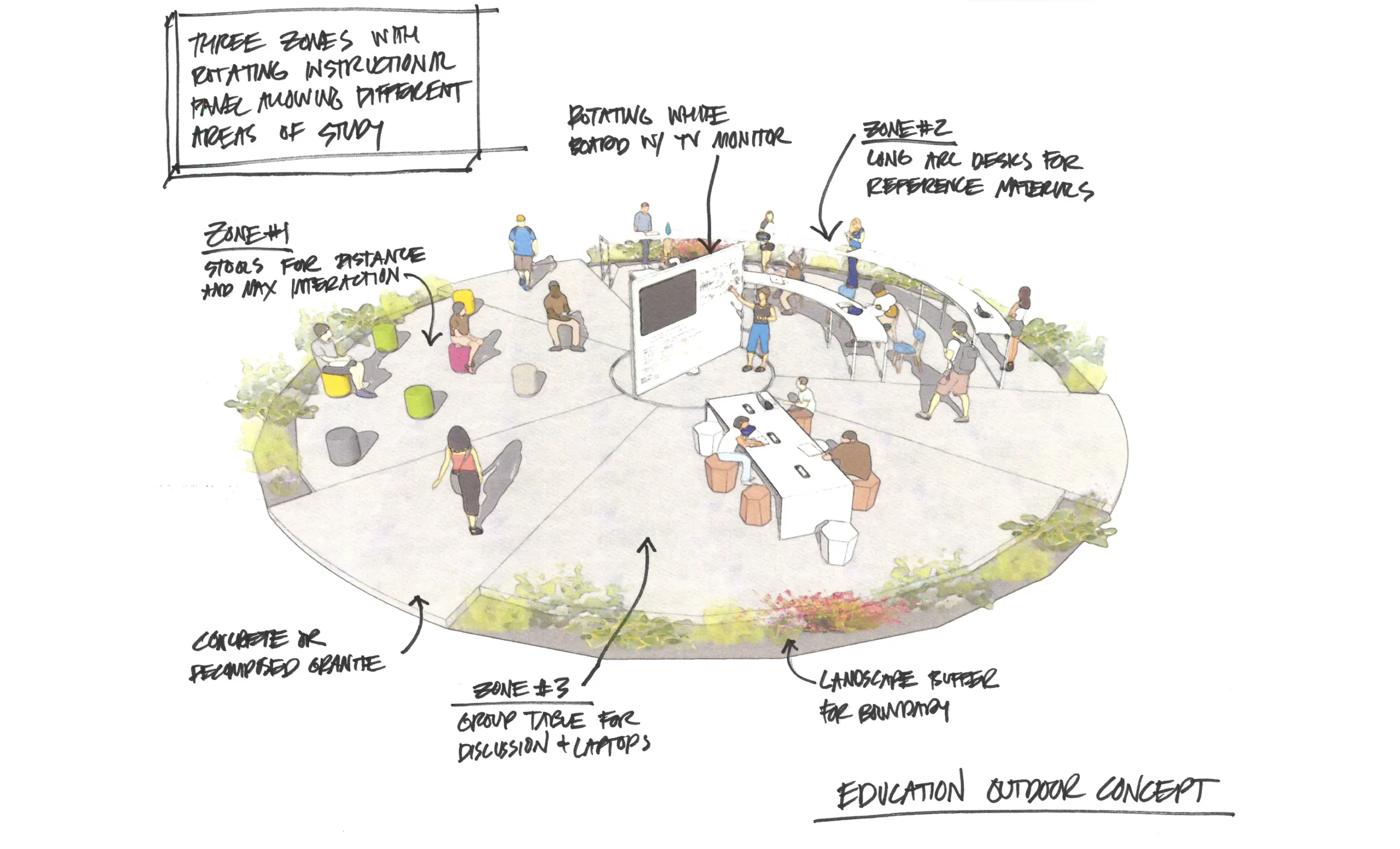
The 19six Learning Environments Group circled up (virtually) during the early shelter-in-place days of the pandemic to start a dialog on how the learning landscape was changing. We ideated about materials, programming, and the adaptability of existing classrooms in this new COVID world. One common thread in our discussions was the idea of indoor vs. outdoor learning. Was the later even feasible? Perhaps outdoor learning will become the more desired “classroom” with the inclusion of exterior fans, shade sails, and misters to keep the environment comfortable. The understanding that connecting to nature is innate in our human psyche inspired a lot of clever, unconventional thinking.
A few more rational ideas from the past rose to the top of the conversation as well. The finger plan schools of the ’50s and ’60s had classroom door access from the exterior only – this would alleviate narrow interior passing corridors with hundreds of students in close proximity. What was old may be new again?
We’re glad to see students back in classrooms, as learning in a school setting is inherently important for the proper development of our youth beyond just the academic curriculum. Our children are not well suited for distance learning or six feet distancing from peers for years at a time. Children learn best when immersed in a classroom environment and while interacting with teachers and friends. We owe it to them to design environments that inspire their growing curiosity while engineering the safeguards that will allow kids to continue being kids.